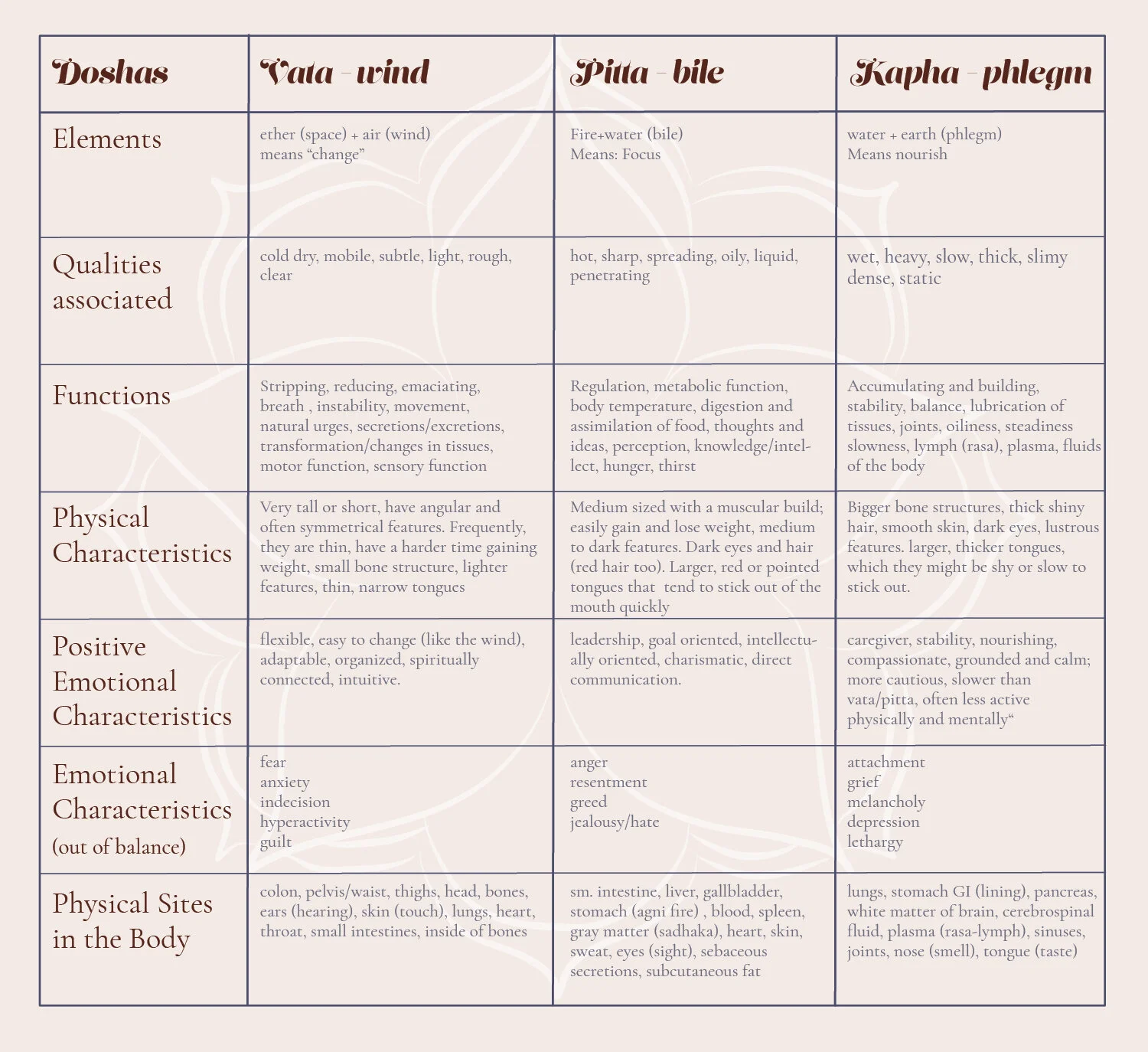
Welcome!
Congratulations for committing to your health and healing through an Ayurvedic PanchaKarma. Panchakarma is a powerful ancient elemental healing cleanse. I am so excited to share the wisdom of this Ayurvedic lifestyle with you. I’ve gathered together some of the important resources here, starting with our week calendar and shopping list.
What is Pancha Karma?
Panchakarma (PK) is the ancient Ayurvedic practice of removing Ama (built up toxicity in the body) and out of balanced doshas and elements within the body, which brings about balance and optimal health. It is recommended for anyone as part of their seasonal or yearly health maintenance, to treat acute or chronic conditions, or as preparation for further rejuvenation therapies (Rasayana).
Incorrect diet, seasonal changes, habits, lifestyle, hormonal changes, environmental toxin exposure, deep seated emotions and excess stress can cause the imbalances in the doshas, which may lead to disturbance in the Agni (digestive fire), which slowly produce Ama in the physical body. Panchakarma reverses that process by cleansing the body to remove Ama (toxicity) , build Agni (digestive fire) and reduce excessive doshas in the tissues. It restores the nervous system and helps alleviate stress, tension, and improve sleep and the quality of life.
Classical Pancha Karma is divided into 3 stages: Purva Karma, Pradhan Karma and Pashchat Karma: simply the preparatory stage, the action stage and the finishing stage. Each is unique and vital to the success of the PK.
Purva Karma is the first set of actions that are taken ahead of a Panchakarma therapy, usually lasting for five to seven days. At this stage the body is prepared for treatment by loosening toxins and excess doshas.
The cause of diseases is ama, or undigested toxins, that get formed in the system due to external factors, and spread to different parts of the body. Through Purvakarma these toxins are localized and collected for easy removal at Pradhanakarma stage. Important Purvakarma techniques consist of pachana (modified diet to improve digestion), consumption of herbs with ghee, Ayurvedic Bodywork, including abhyanga (oil massage), shirodhara (oil cleaning on forehead) and swedana (sweating). These techniques prepare the body for detoxification and revitalization. Panchakarma treatment is impossible without Purvakarma.
Pradhan Karma After 5-7 days of purvakarma, one enters this middle stage in which 1-2 of the specific practices are used. The classical 5 specific cleansing practices include: basti for vata (enema), virechana (purgation) for pitta, rakta mokkas (blood cleansing) for pitta, vamana (emesis purgation for kapha) and nasya (nasal therapy, tridoshic) .
Pashchat Karma Rehabilitating the diet and lifestyle after the detoxification process (Third Phase). The following week the client will return to the purvakarma diet and then gradually back to daily activity. Additional herbs and treatments are recommended to rebuild (shamana) after the cleansing actions (shodhana) of PK.
However, the two weeks prior and post to your purvakarma are vital, please read below for your prep weeks information.
How to prepare (2 weeks prior to purvakarma)
Refrain from Alcohol consumption*
Refrain from tobacco, marjuana and drug consumption *
Refrain from eating inflammatory foods including : nightshades, chilils, spicy, gluten, refined sugars
Refrain from eating red meat, especially pork, some chicken and fish is ok the first week, the week before you begin fish and vegetarian only is recommended.
Consume dairy products in moderation
Consume wheat productions in moderation (some oats and cereals are ok but avoid breads and flours)
Refrain from refined foods, too many sour foods, cooked oils
Refrain from or seriously reduce coffee, moderate green and black tea permitted
Eat warm, cooked, spiced, whole foods, see Food List Link and recipes for inspiration
Take your recommended herbs 2x per day after breakfast and after dinner in warm water
Take triphala at night before bed in warm water ¼ teaspoon (put powder in capsules if taste is hard to manage)
Try to create a balanced sleep schedule, ideally going to bed before 10pm and rising at 6/7 am. If not possible try to arise within the same hour each morning.
Focus on dinacharya self-care routines and mindfulness techniques, meditation and spiritual practice. There is a list below, Start anything you can, we will continue to build these practices during the whole month.
Practice self massage (abhyanga) applying warm oil to the skin 3x per week (see directions
3-7 day days prior snehana + virechana: Ingestion of ghee followed by injestion of purgative to loosen doshas. Specific instructions will be given to client.
*If you are working through addictive relationships with these substances please specify this to your practitioner prior to your initial consultation so they can additionally support you.
Packing list:
Yoga clothes and clothes for warm weather
robe or something comfortable for post treatments
Tongue scrapper (also available locally, please let me know if you want me to provide)
Neti pot (also available locally, please let me know if you want me to provide)
Waterbottle also available locally, please let me know if you want me to provide)
Powdered herbs sent in the mail to you
Sacred items, altar items, anything beautiful and grounding for you
A good attitude
journal
Things you do not need to pack:
Yoga mat or props (provided)
Food for the cleanse or spices (provided)
Proposed Schedule
Wednesday Jan 7
Arrival Day- Snack and dinner, opening ritual.
Thursday Jan 8-Sunday 11
4 Days of purvkarma treatments, including morning yoga and 1.5 hours of bodywork treatments . PK mono diet (kitchari), plus herbs
general schedule Yoga 8am, breakfast 9, treatment 10-1pm, lunch 1, afternoons free, dinner 6pm
Pradanakarma- day 4
Monday Jan 12
Breakfast, depart
Tuesday Jan 13- Sunday 18
Pashchat karma - at home Post PK, recovery, continue with dinacharya, herbs etc.
Yes Foods
Simple, alkaline, whole foods
You are not required to eat all these foods
kitchari (mung beans and white basmati rice)
dark leafy greens (cooked) : chard, kale, bok choy, collards, mustard greens (cooked in the lentils or steamed on their own,)
baby Greens: Arugula, lettuce greens, baby spinach
zucchini , carrots, sweet potatoes, summer squashes (cooked)
white-white veggies (turnips, radishes, jicama, cucumber raw )
turmeric, ginger (fresh and powdered)
fresh green veggie juice- (with no ice or citrus)
avocado
raw oils
sauerkraut*
spices
non- soy miso
Raw seeds (pumpkin, sunflower, ideally soaked or pureed)
Raw nuts* (ideally soaked)
Raw tahini
Ghee
Coconut water
Bitter greens for liver support (dandelion,, mustard greens, arugula)
lemons/limes
fruits (apples, banana, dates, figs, berries, stone fruit)* fruit on its own 1 -2 servings per day
*Use in moderation
Foods to Avoid
Complex, acidic, inflammatory foods
nightshades (tomatoes, peppers, eggplant, potatoes, peppers)
chilis, peppers
Gluten (wheat)
dairy (accept ghee)
Alcohol
Caffeine (including chocolate!)
grains besides quinoa and w rice
cooked oils
Roasted nuts and seeds
packaged foods
Refined sugars
Meat
Dry munchy crunchy foods: chips, crackers, popcorn
bread
Broccoli, cauliflower, brussel sprouts* (they increase gas)
Peanut butter and other nut butters
granola
oranges/grapefruits
Recipes



Recorded Practices
These are some previously recorded meditations and practices available for you to use if you want additional resources. Audio Meditations
Videos
This is a vinyasa video from a previous group cleanse/
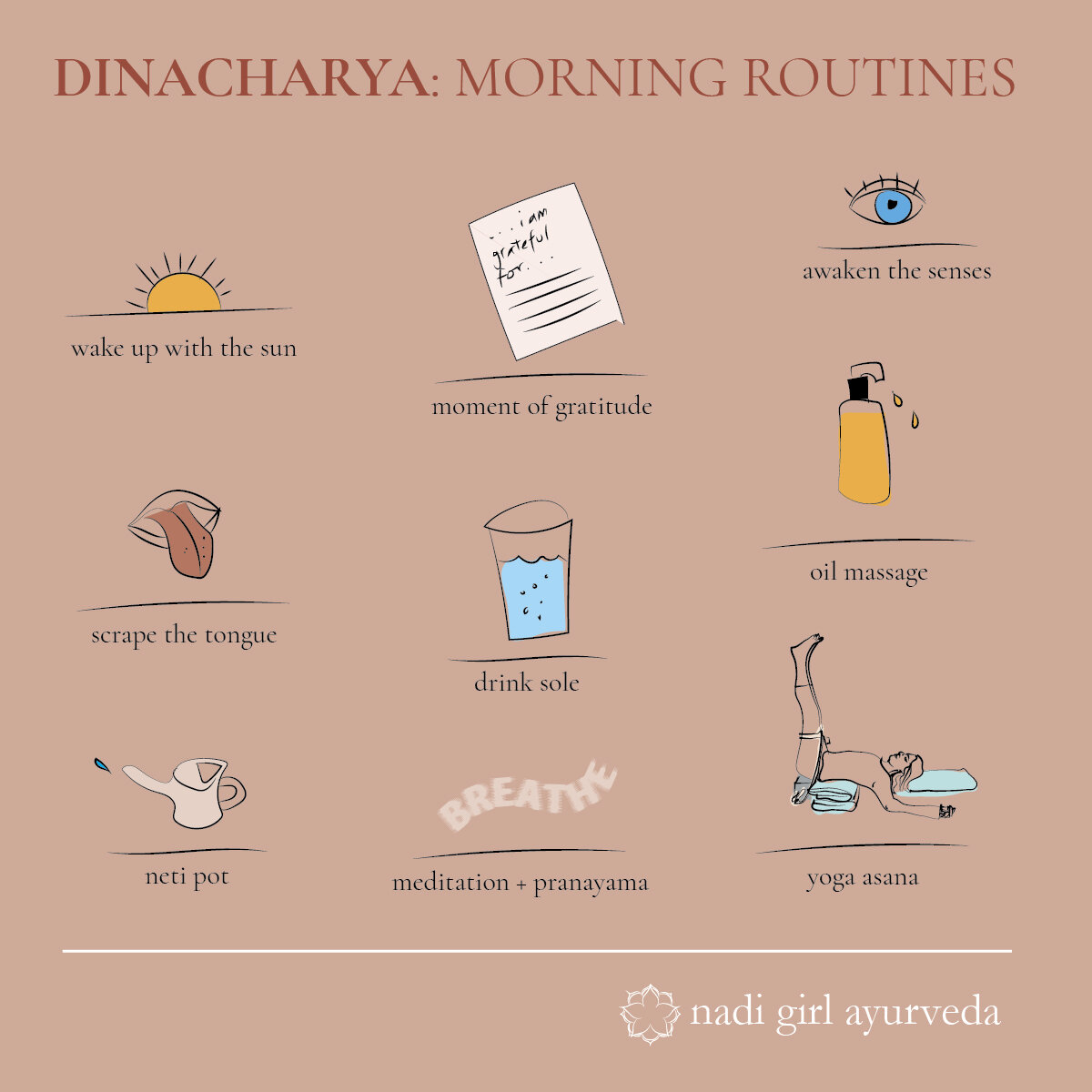
Dinacharya- “daily self-care routine” These practices create regularity & balance we recommend starting any of them you can now and we will continue with them for the whole month together.
These powerful but simple rituals invite us to greet the day with ease, honor the elements, awaken our sense organs and align our bodies with breath and nourishment. Please plan for an extra 30 minutes per morning for these, some of them are quick and easy to add into your routine and the more you prepare before, the easier they will be. See the Ayurvedic Day article for more detailed descriptions.
Wake up with the sun- To wake with the sun allows your body’s natural rhythms to align with the natural rhythms of your location and environment. Ideally, yogis rise before the sun and meditate in the predawn, honoring the sun and absorbing maximum prana. Prana is said to be richest at sunrise and sunset, and all animals wake with the sun. If that is not possible, I recommend waking within 30 minutes of the same time each day.
Moment of gratitude- when you first wake up, before you get up take a moment in gratitude for your life and making it to another day! Do it in a way that feels sincere to you.
Awaken the senses- (Once in the bathroom) Splash a bit of cold water from the sink on your sense organs : ears, eyes, nose, mouth, and skin (face) to consciously activate each sense organ for your day. Recite a short affirmation as you cleanse each organ, I usually say “May I see clearly today” “May I eat mindfully” etc. Find something that rings true to your voice.
Scrape your Tongue, cleanse debris from your mouth by scraping your tongue 7 times forward and backwards when you brush your teeth.
Drink sole- electrolyte drink, wait 15 minutes to eat/drink other things
Abhyanga- massage warm oil on your skin (see step 5. shodhana)) *I love applying the oil and letting it soak in while I meditate. It’s deliciously grounding and adds in focus. This practice can also be done in the evening if you tend to have very early mornings or shower then.
Neti pot (try it in the shower either am or pm, whenever you bathe)
Meditation and Pranayama Practice 15 minutes (or more!) - Continue this practice from pre cleanse days, using the recording or on your own.
Asana yoga practice - on your own with a video or a class, live classes all Feb